Plant Medicine
A growing reference to the plant medicines I work with, the teachers of the green world, from the forests of South America to the mountains of the North.
Here I share what these plants are, where they come from, and how they are traditionally known. I write it slowly, one plant at a time, as my relationship with each of them deepens. None of it is a service to book, just knowledge I want to pass on.
Plantemedisin
En voksende oversikt over plantemedisinene jeg arbeider med, den grønne verdens lærere, fra Sør-Amerikas skoger til Nordens fjell.
Her deler jeg hva disse plantene er, hvor de kommer fra, og hvordan de tradisjonelt er kjent. Jeg skriver det sakte, én plante om gangen, etter hvert som forholdet mitt til hver av dem vokser. Ingenting her er noe du bestiller, bare kunnskap jeg vil dele videre.
Kvann · Angelica archangelica
The plant
One of the oldest known medicinal plants of the North. Kvann grows wild across the Norwegian mountains, and the Sámi have used it for generations. They peeled the young stems and ate them fresh like fruit, flavoured reindeer milk with the plant, and valued the aromatic root as medicine. The Vikings knew it too. It appears in the Icelandic sagas, was cultivated in Norwegian herb gardens, and may have been the first medicinal plant the Nordic countries sent out into Europe.
Where to find it
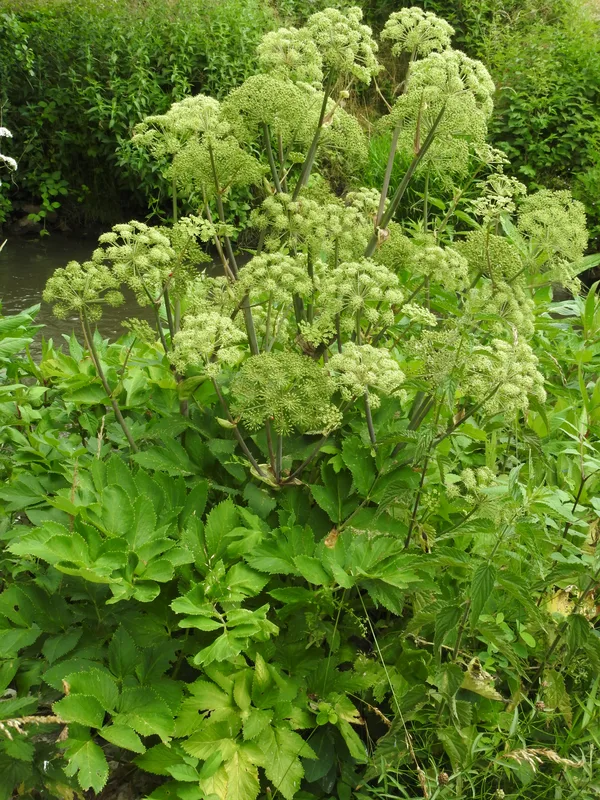
Kvann is a plant of cool, wet places. It grows along mountain streams and riverbanks, in damp meadows and ravines, and down to the sea in the north, thriving in the rich, moist soil of the Norwegian fjell and the Arctic coast. Look for it where the ground stays cold and watered through the summer.
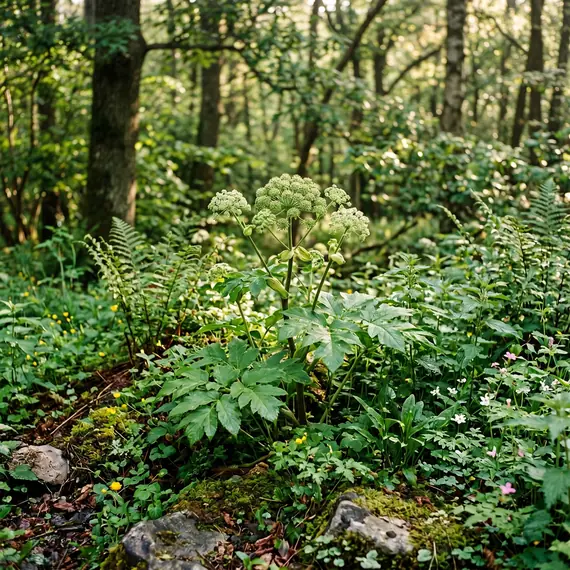
It stands tall, often well above a metre, on hollow, ribbed stems tinged with purple, crowned by large rounded umbels of greenish-white flowers — globe-shaped, not flat. Crush a leaf and the scent is unmistakable: sharp, sweet and aromatic, the surest sign you have the right plant.
A word of caution. Kvann has dangerous lookalikes in the same family. Water hemlock (selsnepe) is among the most poisonous plants in Norway, and hemlock (giftkjeks) and giant hogweed (kjempebjørnekjeks) are dangerous in their own right. Never harvest unless you are certain. The aromatic scent and the round flower heads are what set kvann apart — if in doubt, leave it be.
Medicinal properties
In Nordic and European herbalism, kvann is above all a warming, aromatic bitter — root, seeds and stems all carry it. It is best known as a digestive remedy: it kindles a weak appetite, settles bloating and wind, and eases the slow, heavy feeling of poor digestion. As a warming expectorant it has long been taken for coughs, colds and bronchial congestion, helping loosen and clear the chest. It moves the circulation, brings warmth to cold hands and feet, and encourages a healthy sweat in the first stages of a fever or chill. Older herbals reached for it in times of plague and infection, trusting its aromatic, antimicrobial strength.
A note of care. Kvann is best avoided in pregnancy, and its root and seeds can make the skin more sensitive to sunlight.
The spirit
Kvann carries the spirit of Archangel Michael, and working with the plant is a way to come closer to him. It takes its name, archangelica, from Michael himself, was said to bloom on his feast day, and was known in old Europe as the Root of the Holy Ghost, revealed by the Archangel to a monk in a time of plague. When the spirit shows herself to me she comes as a female angelic warrior, and yet the energy she carries is masculine and protective, a guardian.
Ceremonial use
Sometimes I'm called to drink the root as a tea at the start of a ceremony. It's a protection that builds from the inside out. Where tobacco sets a guard around you, kvann fortifies you from within, steadying and strengthening you before heavy or difficult work, with a quiet lift of energy. The plant's older tradition runs the same way. Angelica has long been a guardian herb, its upper parts burned as incense to cleanse and protect a place, and its dried root kept on the altar or carried for protection.
Kvann · Angelica archangelica
Planten
En av Nordens eldste kjente medisinplanter. Kvann vokser vilt i de norske fjellene, og samene har brukt den i generasjoner. De skrelte de unge stilkene og spiste dem ferske som frukt, smaksatte reinmelken med den, og verdsatte den aromatiske roten som medisin. Vikingene kjente den også — den er nevnt i de islandske sagaene, ble dyrket i norske urtehager, og var kanskje den første medisinplanten Norden sendte ut i Europa.
Hvor du finner den
Kvann trives der det er kjølig og vått. Du finner den langs bekker og elver i fjellet, i fuktige enger og kløfter, og helt ned til havet i nord. Den vokser i næringsrik, fuktig jord, fra fjellheimen til kysten lengst nord. Let etter den der bakken holder seg kald og fuktig hele sommeren.
Den blir høy, gjerne godt over meteren, med hule, riflete stengler som ofte har et fiolett skjær. Øverst sitter store, runde blomsterskjermer i grønnhvitt — formet som kuler, ikke flate. Gni et blad mellom fingrene, og duften er til å kjenne igjen med en gang: skarp, søt og aromatisk. Det er det sikreste tegnet på at du har funnet rett plante.
En advarsel. Kvann har farlige tvillinger i skjermplantefamilien. Selsnepe er blant de giftigste plantene vi har i Norge, og både giftkjeks og kjempebjørnekjeks er farlige på hver sin måte. Høst aldri kvann uten å være helt sikker. Det er duften og de runde skjermene som skiller den fra de andre — er du i tvil, så la den stå.
Medisinske egenskaper
I nordisk og europeisk urtemedisin er kvann først og fremst en varmende, aromatisk bitterurt, med kraft i både rot, frø og stilk. Mest kjent er den som hjelp for fordøyelsen: den vekker matlysten, demper oppblåsthet og luft i magen, og letter den tunge magen når fordøyelsen går tregt. Den er også varmende og slimløsende, og har lenge vært brukt mot hoste, forkjølelse og tett bryst — den løsner slim og gjør pusten lettere. Den setter fart på blodomløpet, varmer kalde hender og føtter, og lokker fram en god svette tidlig i en forkjølelse eller feber. Gamle urtebøker grep til den i pest- og sykdomstider, og stolte på den aromatiske, bakteriedrepende kraften.
Vær forsiktig. Kvann bør unngås i svangerskap, og roten og frøene kan gjøre huden mer følsom for sol.
Ånden
Kvann bærer ånden til Erkeengel Mikael, og å arbeide med planten er en måte å komme nærmere ham på. Den har navnet sitt fra Mikael selv, det ble sagt at den blomstret på festdagen hans, og i det gamle Europa var den kjent som Den hellige ånds rot — som erkeengelen åpenbarte for en munk i en pesttid. Når ånden viser seg for meg, kommer hun som en kvinnelig englekriger, og likevel er energien hun bærer maskulin og beskyttende, en vokter.
Seremoniell bruk
Noen ganger blir jeg kalt til å drikke roten som te i starten av en seremoni. Det er en beskyttelse som bygger seg opp innenfra og ut. Der tobakk legger et vern rundt deg, styrker kvann deg innenfra, gjør deg stødig og sterk før tungt eller vanskelig arbeid, og gir et stille løft av energi. Den eldre tradisjonen peker samme vei: angelica har lenge vært en vokterplante — de øverste delene ble brent som røkelse for å rense og verne et rom, og den tørkede roten lå på alteret eller ble båret med som vern.